

Choosing a reliable customized lithium battery manufacturer requires careful evaluation. B2B buyers need consistent quality, competitive pricing, and flexible production. They also need dependable technical support and clear documentation. Therefore, supplier selection should cover more than unit prices.
A professional manufacturer helps businesses match battery specifications with actual product requirements. Moreover, suitable materials and quality controls support stable performance. Environmental compliance, including RoHS requirements, also matters. This guide explains how to evaluate suppliers and select practical battery solutions.

How Can You Evaluate Lithium Battery Quality?
Battery quality directly affects product performance and customer satisfaction. Therefore, buyers should review cell specifications before placing bulk orders. Capacity, voltage, dimensions, and cycle life all deserve attention.
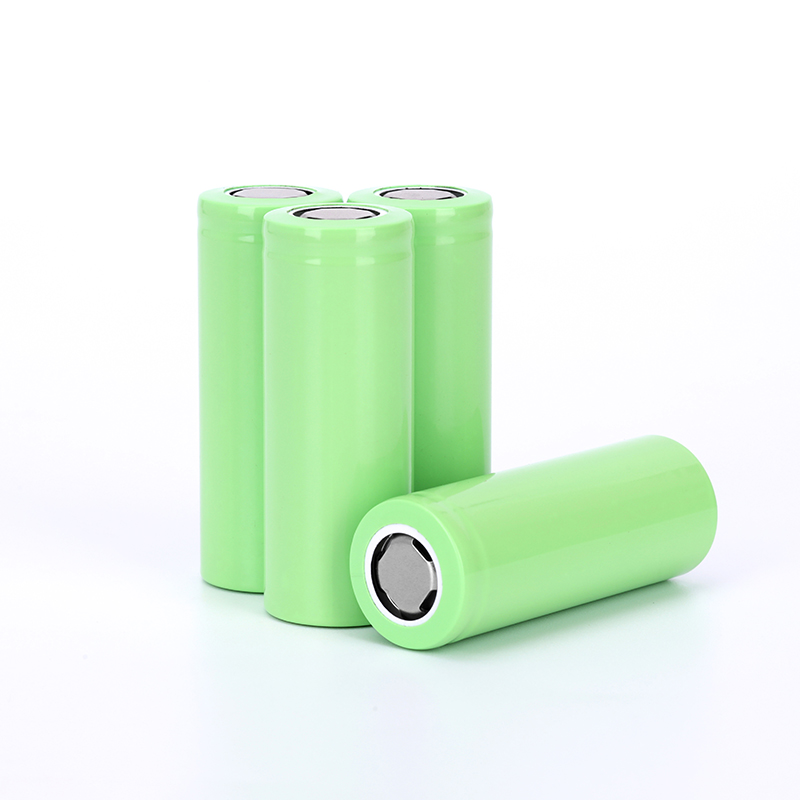
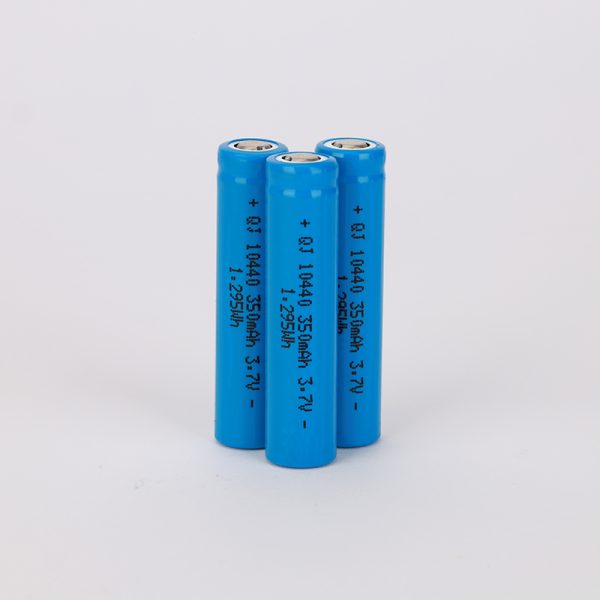
For example, compact electronics often require precise cylindrical cells. A 10440 lithium-ion battery offers a compact power solution. It provides a nominal voltage of three point seven volts. Its rated capacity reaches 350 milliampere-hours.
Check Core Specifications and Production Consistency
A reliable customized lithium battery supplier should provide clear technical data. Buyers should confirm these details before approving samples:
-
Rated capacity and operating voltage
-
Cell dimensions and dimensional tolerance
-
Charge and discharge cycle life
-
Battery structure and terminal design
-
Applicable testing and quality records
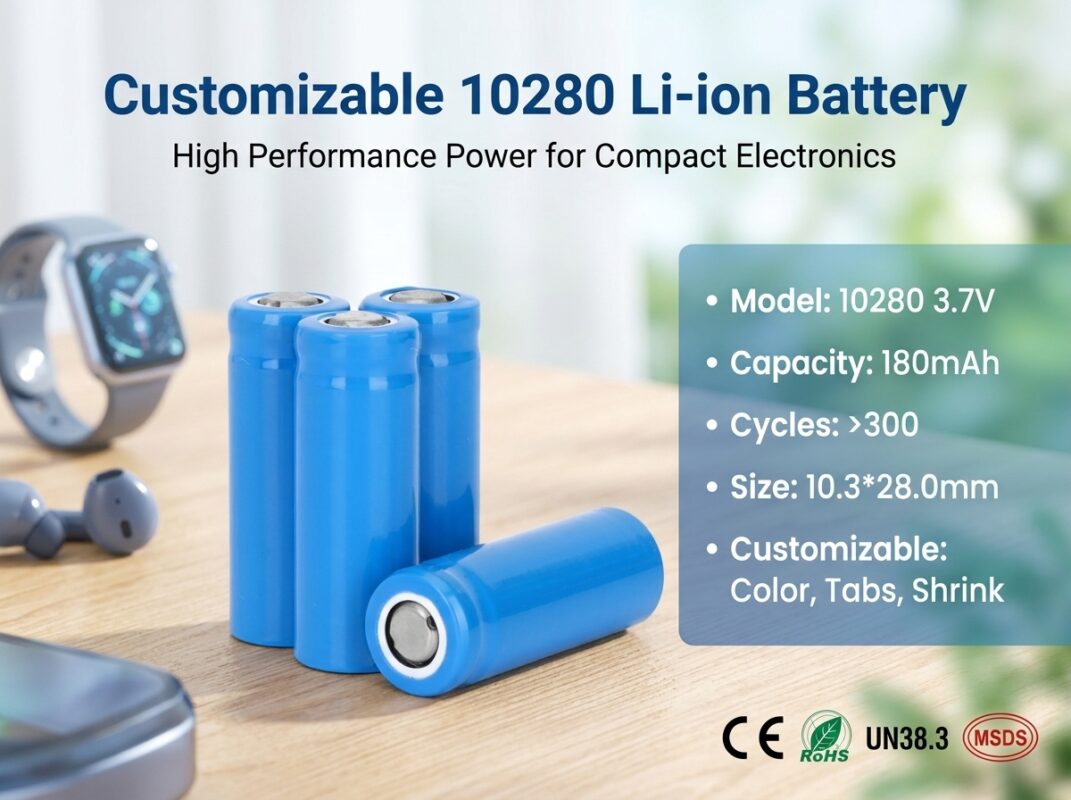
The 10440 cell measures 10.3 millimeters in diameter. Its length measures 44.0 millimeters, with a tolerance of ±0.1 millimeter. It supports approximately 300 charge and discharge cycles.
These specifications help buyers assess product compatibility. Furthermore, sample testing helps verify actual performance. For bulk orders, request consistent inspection standards.

Does the Manufacturer Support Custom Battery Requirements?
Different devices require different battery configurations. Consequently, customization plays an important role in supplier selection. A flexible manufacturer can discuss colors, tabs, packaging, and other details.
For instance, smart home devices may require compact power sources. Medical instruments may need specific battery dimensions. Meanwhile, wireless audio products often prioritize lightweight designs.
Review Customization and Engineering Support
Before selecting a customized lithium battery manufacturer, discuss your project requirements. Confirm whether the supplier supports:
-
Customized battery colors
-
Tab and terminal design options
-
Product labeling and packaging
-
Sample development and specification confirmation
-
Bulk production planning
The 10440 rechargeable lithium battery supports customized colors. Buyers can also discuss tab designs and packaging requirements. This flexibility helps brands maintain consistent product presentation.
However, customization should follow technical compatibility. Therefore, confirm the final specifications before mass production. You can also explore our custom lithium battery product category for additional battery options.

Which Certifications Should Battery Suppliers Provide?
Documentation helps B2B buyers evaluate supplier readiness. It also supports shipping arrangements and market compliance. However, requirements vary across destinations and applications.
A customized lithium battery manufacturer should explain its available documentation. Buyers should check whether documents match the exact battery model.
Verify Applicable Safety and Compliance Documents
The 10440 lithium-ion cell lists several relevant documents. These include CE, RoHS, UN38.3, and MSDS.
| Document | Main Purpose | Buyer Consideration |
|---|---|---|
| CE | Relevant European conformity requirements | Confirm applicable directives |
| RoHS | Restricts certain hazardous substances | Check material compliance |
| UN38.3 | Lithium battery transport testing | Verify model-specific reports |
| MSDS | Chemical and handling information | Request current documentation |
These documents serve different purposes. Therefore, buyers should not treat them as interchangeable. Always confirm the applicable versions and testing scope.
Additionally, ask suppliers about sample records and inspection procedures. Clear documentation helps purchasing teams manage project requirements. For more guidance, visit our lithium battery technical guide.

How Can You Balance Battery Quality and Wholesale Cost?
Wholesale buyers must consider both purchase prices and long-term value. A lower quotation does not always represent the best overall option. Instead, evaluate specifications, consistency, service, and order flexibility.
For compact electronics, the 10440 battery offers practical capacity. Its 350 milliampere-hour rating suits selected low-power devices. Typical applications include flashlights, laser pens, and small electronic tools.
Compare Specifications Against Application Needs
Use the following product details during supplier evaluation:
| Parameter | 10440 Lithium Battery |
|---|---|
| Battery type | Rechargeable Li-ion |
| Model | 10440 |
| Capacity | 350 milliampere-hours |
| Voltage | 3.7 to 4.2 volts |
| Dimensions | 10.3 × 44.0 millimeters |
| Dimensional tolerance | ±0.1 millimeter |
| Cycle life | Approximately 300 cycles |
| Customization | Color, tabs, packaging |
| Available documents | CE, RoHS, UN38.3, MSDS |
Buyers should compare quotations using equivalent specifications. Also, consider sample costs, packaging, and delivery arrangements. This approach supports more accurate purchasing decisions.
What Should You Confirm Before Bulk Ordering?
Even a suitable battery requires careful project coordination. Therefore, buyers should establish clear communication before production. Confirm the sample approval process and order specifications.
Establish a Practical Supplier Evaluation Process
First, share your device requirements and expected order volume. Next, request samples and verify dimensional compatibility. Then, review capacity and relevant performance data.
Afterward, confirm customization details and documentation. Finally, agree on production schedules and inspection standards. These steps help reduce purchasing uncertainty.
A dependable customized lithium battery partner should communicate clearly. It should also provide reasonable technical support. Consistent service helps wholesale buyers plan future orders.
Choose a Battery Partner for Long-Term Supply
Selecting a rechargeable lithium battery manufacturer requires a balanced approach. Buyers should assess product quality, customization, documentation, and wholesale value. Moreover, sample verification helps confirm product suitability.
The 10440 350 milliampere-hour lithium-ion cell supports compact electronic applications. It combines defined dimensions with customizable options. Its listed documentation also helps buyers review compliance needs.
For B2B projects, Qianjing offers rechargeable lithium battery solutions. Contact our team to discuss specifications and wholesale requirements. Request a quotation for your customized lithium battery project.