
MỘT rechargeable li-ion battery can support industrial equipment with compact energy storage and consistent power delivery. Tuy nhiên, each application requires careful consideration of voltage, dung tích, operating conditions, và an toàn. For business buyers, Một custom lithium battery pack can align these requirements with equipment specifications and production budgets. Hơn thế nữa, RoHS documentation helps buyers assess restricted-substance compliance, including lead-related requirements where applicable.

How Can Industrial Battery Packs Meet Different Power Requirements?
Industrial equipment often operates under varying loads and working schedules. Portable instruments, dụng cụ điện, hệ thống an ninh, and medical devices each have distinct energy requirements. Vì thế, battery selection should begin with the equipment’s actual operating profile.
Match Voltage, Dung tích, and Battery Configuration
Đầu tiên, engineers should confirm operating voltage and expected runtime. Kế tiếp, they can evaluate cell capacity, discharge requirements, and available installation space. Cuối cùng, they should assess charging conditions and protection requirements.
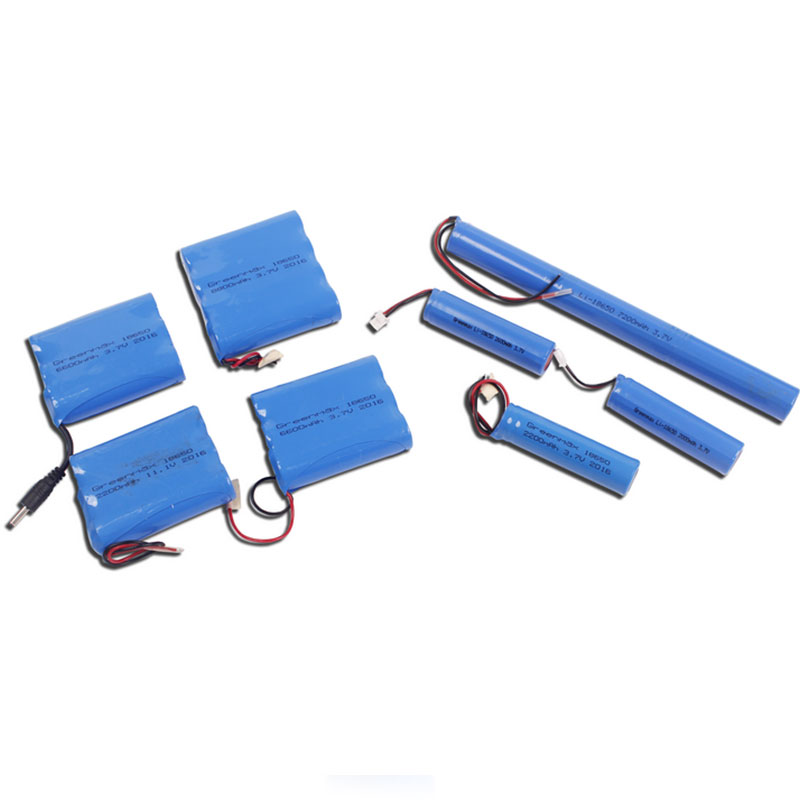
Ví dụ, Qianjing offers a custom 18650 bộ pin based on application-specific requirements. Its listed 18650 cell has a nominal voltage of 3.6 volts and a rated capacity of 2,000 milliampere-hours.
A 16S5P configuration connects sixteen cell groups in series, with five cells in parallel per group. Using these cells, the configuration contains 80 tế bào.
| Parameter | Indicative specification |
|---|---|
| Cell type | 18650 lithium-ion |
| Individual cell voltage | 3.6 vôn |
| Individual cell capacity | 2,000 milliampere-hours |
| Pack configuration | 16S5P |
| Calculated nominal pack voltage | 57.6 vôn |
| Calculated nominal pack capacity | 10 ampere-hours |
| Calculated nominal energy | 576 watt-hours |
| Stated cell cycle life | At least 300 chu kỳ sạc |
These figures are calculations based on the listed cell specifications. Actual pack performance depends on cell selection, protection settings, operating conditions, and final engineering validation.
For suitable projects, buyers can explore custom battery pack solutions to identify configurations aligned with their equipment requirements.

How Can a Rechargeable Li-Ion Battery Extend Equipment Runtime?
Frequent charging can interrupt industrial workflows. Vì thế, battery capacity should reflect operating duration, load variations, and charging availability.
Optimize Capacity for Real Operating Conditions
MỘT rechargeable li-ion battery pack can combine multiple cells to meet specified energy requirements. Tuy nhiên, increasing capacity also affects pack dimensions, cân nặng, cost, and charging time.
Ví dụ, portable diagnostic equipment may prioritize compact dimensions. Trong khi đó, workshop tools may require higher discharge capability during demanding operations.
Engineers should also evaluate the battery management system. Appropriate protection and monitoring functions can help manage voltage, hiện hành, and temperature within specified limits. Do đó, the final design should balance runtime, sự an toàn, and lifecycle costs.
For B2B buyers, this approach helps align battery performance with application needs. It also supports more predictable equipment integration and procurement planning.

How Do Industrial Battery Packs Address Safety Requirements?
Industrial applications require careful battery selection and quality control. Ngoài ra, buyers should review documentation, transport requirements, and operating limits before placing bulk orders.
Verify Cell Quality and Applicable Documentation
Qianjing lists CE, RoHS, UN38.3, and MSDS documentation for its rechargeable battery product. Tuy nhiên, buyers should confirm the exact documents applicable to their selected cell or assembled pack.
| Quality consideration | Available information | Buyer action |
|---|---|---|
| Cell testing | Full-tested cell specification | Confirm acceptance criteria |
| Vòng đời | At least 300 chu kỳ sạc | Verify application-specific expectations |
| CE documentation | Listed for the product | Confirm applicable product requirements |
| RoHS | Listed for the product | Review restricted-substance documentation |
| UN38.3 | Listed for the product | Verify transport-test applicability |
| MSDS | Listed documentation | Request current safety information |
Hơn thế nữa, reliable production depends on consistent raw materials, controlled assembly, and traceable inspection procedures. Buyers should request relevant quality records before approving production.
A well-planned industrial battery pack should also consider installation clearances, temperature exposure, charging equipment, and maintenance access. These details help engineers establish suitable operating boundaries for each application.
For additional technical planning, review lithium battery technical guides before finalizing specifications.
How Can OEM Customization Improve Industrial Equipment Integration?
Standard cell specifications do not automatically determine the best finished battery pack. Thay vì, OEM customization helps align electrical requirements, enclosure constraints, and purchasing objectives.
Adapt the Battery Pack to Equipment Specifications
Qianjing provides OEM customization based on customer requirements. Its engineering process can address parameter adaptation, custom configurations, and preparation for mass production.
Ví dụ, buyers can discuss target voltage, dung tích, cell arrangement, and available installation space. They can also confirm connectors, protection functions, and packaging requirements during technical evaluation.
Hơn nữa, early specification reviews can reduce avoidable design changes. They also help purchasing teams coordinate engineering approval and production scheduling.
A suitable custom lithium-ion battery pack should meet documented performance requirements without adding unnecessary complexity. This approach helps B2B customers balance product quality, project budgets, and long-term supply needs.
Explore OEM battery customization options to discuss requirements for industrial tools, portable equipment, and other battery-powered applications.

Why Consider Qianjing for Bulk Battery Supply?
Combine Manufacturing Capacity with Technical Support
Tìm hiểu thêm về Qiangjing: Huizhou Qianjing New Energy focuses on the research, development, sản xuất, and sales of specialty steel-cased cylindrical lithium batteries.
The company uses production equipment, selected raw materials, and quality control processes to support battery manufacturing. Hơn nữa, its OEM services cover customized solutions from parameter adaptation through mass production.
Qianjing reports serving more than 2,100 doanh nghiệp. Its stated daily production capacity reaches 200,000 tế bào pin, supporting projects with substantial order volumes.
Ngoài ra, the company reports holding 159 bằng sáng chế, bao gồm 57 bằng sáng chế phát minh. It offers customer support within eight hours and free design proposals within 24 giờ. Its products also come with a one-year warranty.
For B2B procurement teams, these capabilities can support supplier evaluation, project coordination, and repeat-order planning. Tuy nhiên, buyers should confirm lead times, specifications, and warranty coverage for each order.
Q&MỘT: Custom Rechargeable Li-Ion Battery Packs
Q: Can Qianjing customize a 16S5P battery pack?
MỘT: Đúng, customers can discuss the 16S5P configuration and application requirements with its OEM team. Final specifications require engineering confirmation.
Q: How can buyers assess battery value?
MỘT: Evaluate tested performance, expected cycle life, safety documentation, warranty terms, and total procurement costs. This provides a more practical basis for comparing suppliers.
Q: What information should buyers provide?
MỘT: Share target voltage, dung tích, operating load, installation dimensions, charging conditions, and expected order quantity. Do đó, Qianjing can evaluate suitable parameters and prepare a design proposal.
Q: Is the listed cell suitable for every industrial application?
MỘT: Not necessarily. Engineers should verify discharge capability, environmental limits, protection requirements, and applicable compliance needs before selecting the final battery pack.